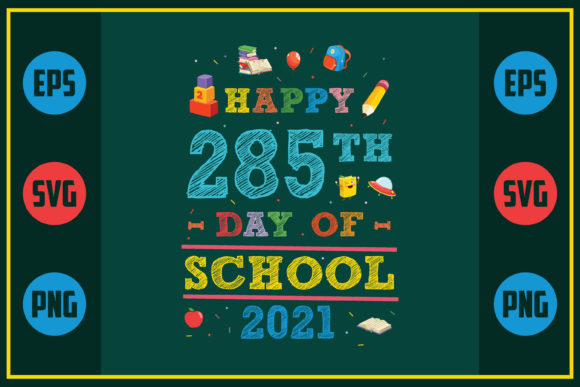
Reviewing the Happy 285th Day of School 2021 Design
As an embroidery designer who has spent years translating digital vectors into stitched reality, I approach every new file with a mix of curiosity and caution. We often see seasonal trends flood the market, but finding a design that balances thematic relevance with technical stitchability is rare. Recently, I evaluated the Happy 285th Day of School 2021 design to determine its viability for real-world projects. This is not just a graphic; it is a potential asset for craft businesses, Etsy sellers, and handmade shop owners looking to capitalize on specific school milestones.
The first impression of this design is one of playful nostalgia. The layout suggests a celebration of endurance and routine, capturing that specific moment in the academic year when students and teachers are counting down the days. Visually, the typography and accompanying elements appear designed for clarity. For an embroidery project, clarity is paramount. Complex, overly detailed graphics often lose their charm when reduced to thread, but this design seems to prioritize bold lines and readable shapes, which is essential for maintaining visual appeal on textured fabrics.
Real-World Application: The Custom Tote Bag Test
To truly understand how a machine embroidery design performs, you must imagine it on a physical product. I visualized this design applied to a canvas tote bag, a staple item for teachers and students alike. The concept is simple: a durable, reusable bag featuring the Happy 285th Day of School 2021 motif, perhaps gifted as a morale booster during the final stretch of the semester.
In this scenario, the design’s structure matters immensely. Canvas has a distinct weave, and if the stitch density is too low, the fabric shows through, ruining the crispness of the letters. If the density is too high, the bag puckers. Based on the visual weight of the design, it appears suitable for medium-weight fabrics. However, because this is a digital embroidery file provided as an SVG, the end-user must be aware that conversion from vector to stitch format requires careful attention. If you are using this for a tote bag design, ensuring that the fill areas are robust enough to cover the fabric texture without becoming stiff is crucial.
Versatility Across Apparel and Home Decor
Beyond tote bags, this design holds promise for various custom apparel items. Consider a teacher’s sweatshirt. Sweatshirt embroidery requires designs that can handle the loft of fleece or French terry fabric. A design like this, likely featuring bold lettering, would stand out well against a heather grey or navy background. It serves as a conversation starter in the staff room and adds a personal touch to standard workwear.
For those interested in baby embroidery or younger student gifts, the design could be scaled down for a small backpack patch or a lunchbox label. However, scaling requires vigilance. When reducing the size for smaller items, fine details may merge. I recommend testing the design at its smallest intended size on scrap fabric to ensure legibility remains intact. Additionally, this theme fits well into holiday embroidery collections focused on end-of-year celebrations, making it a versatile addition to a spring or early summer product lineup.
Technical Considerations for Stitch Quality
While the aesthetic is appealing, the technical execution determines the quality of the finished product. Since the product description specifies that you receive an SVG file for use with Cricut, Silhouette, Adobe Suite, Inkscape, and CorelDraw, it is important to note that this is primarily a vector graphic. For machine embroidery, this vector must be digitized into an embroidery file format compatible with your machine, such as PES, DST, or EXP. This step is critical.
If you are digitizing this SVG yourself, pay close attention to the stitch density. Heavy fill stitches on thin fabric can cause distortion. Using a proper stabilizer is non-negotiable. For knit fabrics like t-shirts, a cut-away stabilizer provides the necessary support to prevent the design from warping after washing. For woven fabrics like aprons or pillow covers, a tear-away stabilizer might suffice, depending on the stitch type used.
Another factor is thread color contrast. The design’s impact relies on readability. On dark fabrics, using light-colored threads for the main text ensures the message pops. Conversely, on light fabrics, vibrant, saturated colors can add energy. I advise creating black and white mockups before stitching to check for contrast issues. This simple step can save hours of unpicking and re-stitching.
Navigating Fabric Challenges and Hoop Sizes
Not all surfaces are created equal. Applying this design to curved surfaces, such as caps, requires experience. The hoop size must accommodate the entire design without distortion. If the design is wide, a larger hoop is necessary, which might not fit all home embroidery machines. Always measure your maximum hoop area before committing to a project.
Textured fabrics present another challenge. If you are stitching on a waffle-knit towel or a rough linen, the satin stitch borders may sink into the fabric. In such cases, adding an underlay stitch or using a topping material can help the design sit on top of the texture rather than disappearing into it. For stretchy fabrics, avoiding dense fill stitch areas in favor of lighter running stitches or applique techniques can reduce bulk and improve comfort.
Commercial Viability and Brand Consistency
For Etsy sellers and small shop product creators, consistency is key to building brand trust. This design offers a niche appeal that can differentiate your offerings from generic school supplies. It speaks directly to the emotional journey of the school year, creating a connection with buyers who appreciate thoughtful, personalized touches.
However, commercial use requires due diligence. Before selling items made with this design, confirm the licensing terms. While the product falls under Crafts and Graphics, the rights to sell finished physical goods versus digital assets can vary. Ensure that your use of the SVG complies with the creator’s license agreement. Transparency with customers about the handmade nature of the product enhances perceived value. High-quality stitching, neat backings, and professional presentation turn a simple embroidered item into a premium personalized gift.
Final Designer Notes and Best Practices
To maximize the potential of the Happy 285th Day of School 2021 design, follow these practical steps:
- Test on Scrap Fabric: Always run a test stitch-out on the same fabric type you intend to use for the final product. This reveals tension issues and density problems early.
- Check Thread Colors: Select threads that complement the fabric while ensuring high contrast for readability.
- Verify Digitization: Since the file is an SVG, ensure it is properly digitized for embroidery if your machine does not accept vector files directly for stitching.
- Use Appropriate Stabilizers: Match the stabilizer to the fabric weight and stretch to prevent puckering.
- Inspect Small Details: Zoom in on the design to identify any tiny elements that may not stitch well and simplify them if necessary.
- Consider the Audience: Think about who will receive the item. A teacher might prefer a subtle placement on a pocket, while a student might enjoy a large, bold statement on the back of a jacket.
In conclusion, the Happy 285th Day of School 2021 design is a promising asset for creative entrepreneurs. Its strength lies in its thematic specificity and potential for clear, bold execution. By paying attention to technical details like stitch density, stabilizer choice, and fabric compatibility, you can transform this digital graphic into a high-quality embroidered patch, apparel piece, or home decor item. Whether you are creating design assets for a broader collection or a one-off printable mockup for your online store, this design offers a solid foundation for meaningful, marketable crafts.